
What is colon cancer?
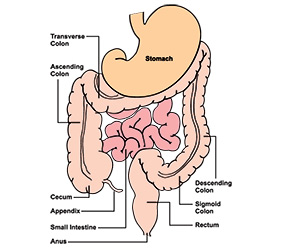 Colon is the main part of the large bowel, which is the lower part of the digestive system. Rectum is the last 6 inches of the large bowel. Colorectal cancer includes cancer of the colon and cancer of the rectum. Together, they are more commonly called “bowel cancer” or “colon cancer.” Colon cancer is the fourth most common type of cancer diagnosed in Ontario. It is also the second most common cause of cancer death in Ontario. The risk of colon cancer goes up with age. About 90% of new cases are diagnosed in people age 50 and older.
The colon and the rectum are part of the body’s digestive system. After food is digested in the stomach, it passes first into the small intestine to digest more and then into the colon. The colon is a hollow, muscular tube that is coiled inside the abdomen. Its main job is to absorb water from the digesting food and form stool (poop). The average colon is about 168 centimetres (5.5 feet) long. Stool that is ready to leave the body is stored in the rectum.
Overall, colon cancer is the second most common cause of cancer death in Ontario.
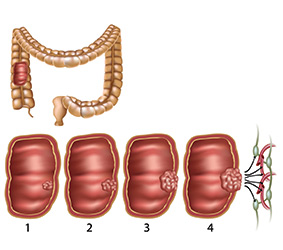
It is not uncommon for groups of abnormal cells to grow on the lining of the colon. These growths, called polyps, can be raised or flat. Most polyps are benign, meaning they are not cancer. But in some cases, a polyp may turn into cancer over time.
Cancer in the colon or rectum can take up to 10 years or more to grow to an advanced, or late, stage. When colon cancer is diagnosed early, 9 out of every 10 people with the disease can be cured. If colon cancer is diagnosed later, it can be treated, but curing it is less likely – only about 1 out of every 7 people with colon cancer diagnosed at a later stage will be cured.
Risk factors you can change or control

Nutrition and diet
Red meat and processed meat
There are many reasons red and processed meats may raise colon cancer risk:
- The iron in the red blood cells of red meat may help form potentially carcinogenic (cancer-causing) substances.
- Cooking red meat at a high temperature can form potentially carcinogenic substances.
- Processed meats often have nitrates or related substances that can lead to abnormal changes in cells.
Dietary fibre
A diet that is high in fibre may help lower the risk of getting colon cancer. Fibre helps keep the colon healthy by speeding up how fast stool (poop) leaves the body. Fibre is found in whole grains, vegetables and some fruit.
Vegetables and fruit
Vegetables and fruit can help prevent poor nutrition, provide natural sources of cancer-fighting vitamins and help people stay healthy.
Milk products and calcium
Calcium is a mineral that helps with muscle contraction (including the heart muscle), hormones, sending messages through the nervous system, and maintaining strong bones and teeth. People who have more calcium, either by taking supplements or from their diet (like from milk products, alternatives with added calcium or milk alternatives), may have a slightly lower risk of getting colon cancer than people with low calcium levels.
Vitamin D
Vitamin D helps the body absorb and use calcium. Vitamin D is important for bone health, lowering inflammation, and improving muscle strength and the immune system. It is possible that some of these effects may help protect against colon cancer. However, at this point, studies on vitamin D and colon cancer have had inconsistent and sometimes weak results. More research will be needed to figure out how much of an effect vitamin D has on the risk of getting colon cancer.
Multivitamins
Multivitamins usually include the B vitamin folate (folic acid). Some research shows that people who have regularly taken multivitamins that include folate over several years (for example, 12 years or more as studied by researchers) have a lower risk of getting colon cancer. This effect may be because folate helps DNA work properly, and helps with normal cell repair and division. However, it is unclear exactly how folate might be helpful and there is very little research on folate and colon cancer. In the meantime, a balanced and healthy diet is the best way to get all of the vitamins and nutrients the body needs.

Alcohol
People who drink alcohol regularly have a higher risk of getting colon cancer. Alcohol may damage the DNA of cells or allow other cancer-causing substances to more easily enter cells.

Smoking
Although smoking is usually linked to lung cancer, smoking also raises the risk of getting many other types of cancer, including colon cancer. Cigarette smoke has over 70 chemicals that are known to cause cancer. There is no safe amount of smoking.

Physical activity
In studies comparing people who were less and more physically active, people who were the most active had a lower risk of getting colon cancer. The good effects of physical activity may be due to its ability to lower inflammation, lower insulin levels, improve the metabolism of steroids, and speed up the movement of stool (poop) through the colon.
Body weight
Body mass index (BMI) is an estimate of health based on height and weight. Having a higher BMI may raise the risk of getting colon cancer. However, the BMI may not be right for you if you are younger than age 18 or older than age 65, if you are pregnant, breastfeeding or chestfeeding*, or if you are an adult with a highly muscular or very lean body type. In these cases, talk to your doctor or nurse practitioner about ways to improve your health. Eating a healthy diet and regular physical activity can help you stay healthy.
*Some people, including trans men, transmasculine people and nonbinary people, may prefer using the term "chest" when describing the breasts and the terms "chestfeed" or "chestfeeding" to describe the process of nursing. The terms “breast,” "breastfeed" and "breastfeeding" are still used to make sure the language is clear for everyone.
Diabetes
People with diabetes may have a higher risk of getting colon cancer. Research has not yet found out why.
Acetylsalicylic Acid (ASA or Aspirin®)
ASA belongs to a class of medications called non-steroidal anti-inflammatory drugs (NSAIDs). Studies on people regularly taking ASA to protect against heart disease and stroke found that it also lowered the risk of getting colon cancer. The exact reason why ASA has this effect is still being studied.
Although many forms of ASA are available without a prescription, taking it regularly can have benefits and risks. It is important to talk with your doctor, nurse practitioner or pharmacist about the benefits and risks of ASA.
Prescription medications that have female hormones
Oral contraceptives
Some research shows that people who were assigned female at birth and take oral contraceptives (birth control pills) for at least 5 years have a lower risk of getting colon cancer than people who have never used birth control pills. The exact reason for this effect is not known. One possibility is that birth control pills lower the levels of certain digestive enzymes (chemicals) that may be linked to colon cancer. It is important to talk with your doctor or nurse practitioner about the risks and benefits of birth control pills.
Hormone replacement therapy (HRT)
HRT may be used to treat the symptoms of menopause, like hot flashes. Some research shows that people who take HRT for 5 years or more have a lower risk of getting colon cancer than people who have never taken HRT. Talk with your doctor or nurse practitioner about the risks and benefits of HRT.
Risk factors you cannot change or control

Family history
Someone may have a higher risk of getting colon cancer if they have a first-degree relative (a biological parent, sibling or child) who was diagnosed with the disease before age 60, or 2 or more first-degree relatives diagnosed at any age.
Having colon polyps (abnormal growths on the lining of the colon) is common, so having a family history of colon polyps does not necessarily mean someone has a higher risk of getting colon cancer. Not all colon polyps turn into cancer.
Although they are fairly rare, some genetic conditions are strongly linked to colon cancer. These conditions include Lynch syndrome, familial adenomatous polyposis (FAP) and attenuated FAP, MYH-associated polyposis (MAP), Peutz-Jeghers syndrome and juvenile polyposis.
Read more about genetic testing.
Inflammatory bowel disease (IBD)
There are 2 main types of inflammatory bowel disease (IBD): Crohn’s disease involving the colon and ulcerative colitis. Both diseases lead to abnormal changes in the digestive tract and trigger chronic inflammation that can lead to cancer. Research suggests that people who have either Crohn’s disease involving the colon or ulcerative colitis for 10 or more years have a much higher risk of getting colon cancer.
Height
Research shows that tall people may have a slightly higher risk of getting colon cancer than people who are not tall. The reason for this relationship is not known. It is thought that height may be a marker for genetic, environmental, hormonal or nutritional factors that affect growth.
What you can do to protect yourself

Screening:
The ColonCancerCheck program
Cancer screening is testing done on people who may have a higher chance of getting cancer, but who have no cancer symptoms and generally feel fine. Getting screened, or checked, for colon cancer can help find the disease early, when treatment has a better chance of working. When colon cancer is caught early, 9 out of every 10 people with the disease can be cured.
In Ontario, people who qualify can get screened through ColonCancerCheck, the province-wide screening program designed to encourage people to get checked for colon cancer and to lower deaths from colon cancer. The program has many benefits, including:
- inviting people to get checked for colon cancer.
- reminding program participants when it is time for their next screening test
- telling participants their screening test results and next steps
- trackings program quality and performance.
There are a few ways to get checked for colon cancer. The best test for you depends on your family history.
The fecal immunochemical test (FIT) is a safe and painless test that checks your stool (poop) for tiny drops of blood, which can be caused by colon cancer. You can do the test in the comfort and privacy of your own home, and it only takes a few minutes. An abnormal FIT result does not necessarily mean you have colon cancer, but it does mean you may need a test called a colonoscopy within 8 weeks.
The FIT is recommended for people ages 45 to 74 who have:
- no personal history of colon cancer, Crohn's disease involving the colon, ulcerative colitis or colon polyps that need testing with colonoscopy (polyps are abnormal growths on the lining of the colon), and
- no first-degree relatives (parents, siblings or children) diagnosed with colon cancer, or
- any of the following types of family history:
- only 1 first-degree relative diagnosed with colon cancer at age 60 or older
- one or more first-degree relatives diagnosed with colon polyps
- one or more second-degree relatives, including grandparents, grandchildren, niblings (for example, nieces and nephews) and piblings (for example, aunts and uncles), diagnosed with colon cancer or colon polyps at any age.
The ColonCancerCheck program does not recommend regular screening for people over age 74. However, someone may choose to get checked after age 74 if the benefits of screening outweigh the risks.
After age 74, talk to your family doctor or nurse practitioner about whether you need to continue screening.
Your doctor or nurse practitioner can order a FIT kit for you. If you do not have a doctor or nurse practitioner, you can get a FIT kit by:
- calling Health811 (TTY: 711)
- using the live chat at ontario.ca/health811
For more information, visit ColonCancerCheck.
Another test that can be used to look for colon cancer is flexible sigmoidoscopy (sig-moid-os-co-pee). During this exam, a thin flexible tube with a camera on the end is put into the rectum. The camera makes it possible for the doctor to see the inside of the rectum and the sigmoid colon. The same groups of people who qualify to get checked for colon cancer with the FIT can choose to get checked instead with flexible sigmoidoscopy.
Colonoscopy (koh-luh-nos-kuh-pee) is an exam that allows a doctor to look at the lining of the rectum and colon using a long, flexible tube with a camera on the end. People qualify to get checked for colon cancer with colonoscopy if they have:
- one first-degree relative (parent, sibling or child) diagnosed with colon cancer before age 60, or
- two or more first-degree relatives diagnosed with colon cancer at any age
Colonoscopy is recommended starting at age 40, or 10 years earlier than the youngest age a relative was diagnosed (whichever comes first).
People with abnormal FIT results should also get a colonoscopy.
In addition, colonoscopy may be used to check people with symptoms of colon cancer or certain diseases of the colon and rectum (for example, Crohn's disease involving the colon or ulcerative colitis).
People who have any of the following symptoms should talk to their doctor or nurse practitioner:
- blood (bright red or very dark) in your stool (poop)
- new and persistent diarrhea, constipation or the feeling that the bowel does not empty all the way
- new and persistent stomach discomfort
- losing weight and do not know why
- a drop in red blood cell count (anemia) that is caused by low iron
- stools that are narrower than usual
Other screening tests
You may have heard of other colon cancer screening tests, but the ColonCancerCheck program (Ontario's colon cancer screening program) does not recommend them because there is not enough research to support using them. Some of these tests include the guaiac fecal occult blood tests (gFOBT), blood or urine metabolomic tests, blood or stool DNA tests, computed tomography colonography, capsule colonoscopy and double contrast barium enema.
Learn more:
- Visit ColonCancerCheck
- For help finding a family doctor or nurse practitioner, call Health811 at 811 (TTY: 711) or visit ontario.ca/healthcareconnect
Find information for First Nations, Inuit and Métis people on cancer and colon cancer screening:
- Cancer and Screening Toolkit – Use it to learn, or help others learn about the basics of cancer, how to prevent it, and treatment.
- First Nations Colon Screening Fact Sheet
- Inuit Colon Screening Fact Sheet
- Métis Colon Screening Fact Sheet
Eat healthy foods
A healthy diet means having a balanced diet with a wide range of food groups. A healthy diet can help lower the risk of getting colon cancer.
It is common for people to think that their diet is healthier than it really is. Keep a food diary for a week and track what you eat each day. At the end of the week, compare your diet to the recommendations in Canada’s Food Guide. You may find that you are eating more red or processed meat than you should or could benefit from having more dairy products, vegetables, fruit or whole grains.
A diet high in fibre has many immediate – as well as long-term – health benefits. In addition to preventing constipation and lowering the risk of getting colon cancer, a high fibre diet can help people with diabetes manage their blood sugar. Eating lots of fibre-rich vegetables, fruit and whole grains is the best way to get more fibre. When you eat more fibre, be sure to stay hydrated by drinking enough water and other fluids. UnlockFood.ca has more information.

Learn more:
- For information on how many servings of meat or meat alternatives, vegetables and fruit you need each day, check out the Handy Guide to Serving Sizes at UnlockFood.ca.
- Make snacking a healthy habit by snacking on vegetables and fruit. For ideas, visit UnlockFood.ca.
- UnlockFood.ca’s My Menu Planner can help you plan a week’s worth of healthy meals, including recipes and shopping lists. There are even budget-friendly recipes.
- When you are in the grocery store, it can be hard to read and understand the nutrition labels on foods so you can make healthier choices. Get tips on reading food labels at UnlockFood.ca.
- You can speak with a registered dietitian for free by calling Health811 at 811 (TTY: 711). Ask about programs or resources available in your community or through your local Public Health Unit.
Prevent or manage diabetes
People with diabetes or blood sugar that is too high have a higher chance of getting colon cancer. If you have diabetes or high blood sugar, make sure you:
- get regular care by your doctor or nurse practitioner
- take your diabetes medication or insulin, if prescribed
- eat healthy foods
- get at least 30 minutes of physical activity on most days or 3 hours each week
- avoid smoking cigarettes
- limit how much alcohol you drink
Learn more about preventing or living with diabetes in Ontario from:
- The Ministry of Health
- Ontario Health’s patient guides on Type 1 Diabetes or Type 2 Diabetes
Be physically active
Being physically active can help you stay healthy and lower your risk of getting a number of serious diseases, including breast and colon cancer, heart disease and diabetes. It can also help relieve stress and improve mood. Health Canada recommends that adults ages 18 to 64 be moderately to vigorously active for at least 2.5 hours (150 minutes) a week.

Tips:
- Try to plan different kinds of activities you enjoy, such as:
- fast walking
- strength training (for example, lifting weights)
- yoga
- Whenever possible, walk or bike to work, to go shopping or when moving around your neighbourhood.
- If you do not like exercising alone, do it with your partner, friends or family, join a team, find a walking buddy, or take part in sports or recreational activities. Look for information at your local recreation centre or YMCA/YWCA for classes and groups.
- Make back-up plans for when you face challenges. For example, if the weather is bad and you cannot walk outside, do yoga or lift weights instead.
Learn more:
- Public Health Agency of Canada – Being Active
- ParticipACTION
- Canadian Society for Exercise Physiology – 24-Hour Movement Guidelines
- If you have not been active for a while, you may want to do the Get Active Questionnaire and talk about the results with your doctor or nurse practitioner

Reduce body fat
Large amounts of body fat can raise the risk of getting colon cancer. The good news is that small changes in your diet and exercise can lower body fat and lower the chance of getting colon cancer. Making small but consistent changes is a lot safer – and is more likely to lead to long-term success – than going on an extreme diet or weight loss plan.
Some proven ways to lose body fat include:
- cutting down on portion sizes, eating a variety of vegetables and fruit, and avoiding high-fat foods.
- eating at regular intervals throughout the day.
- regular physical activity.
Learn more:
- Get tips for healthy eating at UnlockFood.ca.
- You can speak for free with a registered dietitian by calling Health811 at 811 (TTY: 711). Ask about programs or resources available in your community or through your local public health unit.
Find out about body mass index, and the relationship between weight and health at Canadian Cancer Society’s website.
Limit how much alcohol you drink
Research suggests that when it comes to colon cancer, there is no safe level of drinking. To lower your risk of getting colon cancer, you may want to stop drinking or drink less often.
Tips for drinking less:
- Set aside more days each week as non-drinking days.
- Plan ahead of time how you will lower the amount you drink or handle the urge to drink.
- Know the standard drink sizes so you can accurately track how much you drink.
- Switch to non-alcoholic drinks after you have reached your limit.
If you have trouble cutting down or quitting, there are lots of free resources to help.
Learn more:
- The Canadian Cancer Society – Limit Alcohol
- For help with alcohol addiction: ConnexOntario – Health Services Information for people in Ontario
- Ontario Health's quality standard on Problematic Alcohol Use and Alcohol Use Disorder
Become smoke-free
Cigarette smoke – whether it is your own or someone else’s second-hand smoke – can affect your immune system, damage DNA and raise the risk of getting cancer. Even if you see yourself as a person who smokes, you can change that. Over half of people in Ontario who have ever smoked have been able to quit. Of the people who still smoke, nearly half try to quit each year. Sometimes, people need to try quitting several times before they become permanently smoke-free. Each time you try to quit smoking, you move closer to your goal of being smoke-free.